Resources & Calculators
Buying guides, brand comparisons and construction calculators — written by the shop-floor team at Harsh Traders in Mandi Binaganj. Practical, dealer-side answers to the questions we hear every day.
Filter resources
Showing 19 of 19
All resources
Choosing cement isn't about the cheapest bag — it's matching the right chemistry (PPC or OPC), the right grade (43 or 53), a genuine brand and a fresh manufacturing date to your specific use on site.
OPC is pure Portland cement — fast-setting, high early strength. PPC blends fly ash with clinker — slower, more workable, more durable. Most house work is safer with PPC; structural elements often need OPC.
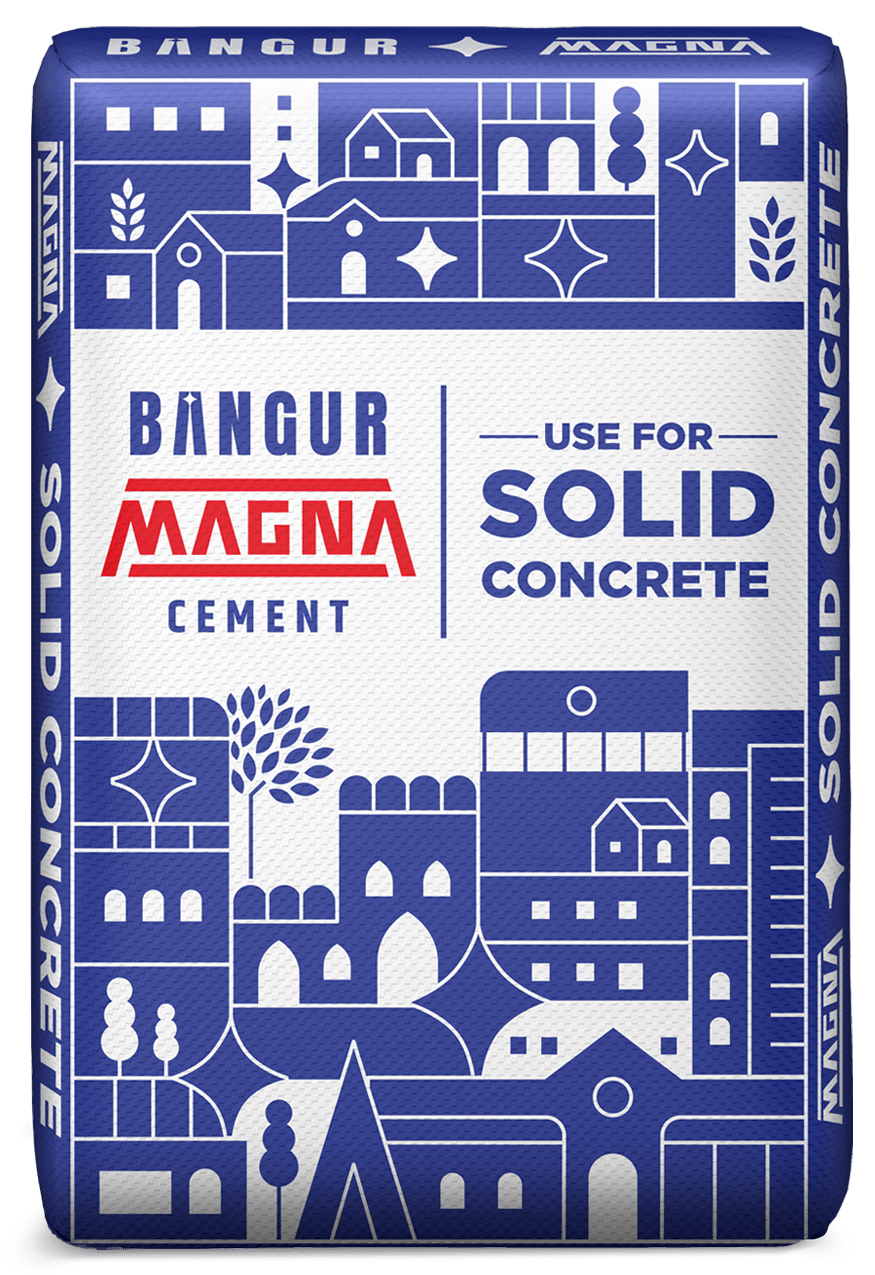
For most residential house construction, a good PPC like Bangur Magna or Roofon Plus handles brickwork, plaster and slabs excellently. Reserve OPC 53 for engineered structural members.
A typical 1000 sq ft single-storey house in this region uses roughly 400 bags of cement, 4 MT of TMT sariya, 8000 bricks and matching sand/aggregate. Actual numbers depend on the design, wall thickness and number of storeys.
For earthquake resistance, choose Fe 550D bars — higher yield strength than Fe 500 with the ductility (elongation) that lets a structure flex without brittle failure. SEL Tiger 550D is the standard in our belt.
Genuine cement bags carry an intact factory seal, printed manufacturing date and batch code, and behave predictably when you test a pinch between your fingers.
Store cement on wooden pallets, away from walls, covered with plastic sheeting, in first-in-first-out order. The goal is zero contact with ground moisture and minimum exposure to humid air.
Before you pay for a load of construction material, run through eight quick checks — dealer authorisation, brand, freshness, paperwork, delivery guarantee and buffer stock — to avoid site-day surprises.
Bangur and UltraTech both meet the same BIS grade specifications. In the Binaganj–Chachauda belt, Bangur has stronger last-mile availability through authorised dealers like Harsh Traders; UltraTech is a widely recognised national brand.
Bangur and ACC both meet BIS grade specifications; the choice usually comes down to local dealer strength, freshness and price on the day.
Ambuja and Bangur are both established brands meeting the same BIS grade specifications; the practical choice depends on which one is fresh, close and well-supported at your site.
Fe 550D bars offer higher yield strength (≥ 550 MPa) than Fe 500 bars, plus certified elongation. For most new construction — especially in seismically active zones — Fe 550D is the modern default.
Building in Binaganj is helped by local material availability and a mature contractor pool, but demands attention to summer curing, monsoon logistics and honest supplier selection.
House-construction cost in Chachauda splits roughly into material (60–65%), labour (20–25%) and finishing (10–15%). Material is the biggest lever — choose branded, fresh stock and don't over-order.
MP weather — hot dry summer, sharp monsoon — argues for PPC-heavy specifications, disciplined curing, corrosion-aware TMT choices and waterproofing on flat roofs.
Enter area and thickness — this calculator returns approximate cement bag count using standard PPC volume assumptions. Use as a first-pass estimate; refine against the actual mix design.
Enter length, width and thickness — this calculator returns concrete volume (m³) and split material quantities based on your chosen mix (1:1.5:3, 1:2:4, 1:3:6).
Enter wall length, height and thickness (4.5" or 9") — this calculator returns the approximate brick count. Add ~5% wastage.
Enter diameter (mm) and total length (m) — this calculator returns weight (kg) using the standard formula weight/m = d²/162.